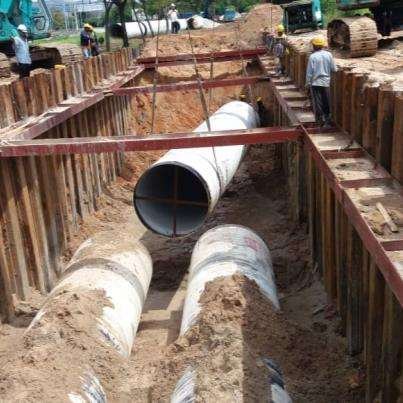
Pipe Laying Works
With over 25 years of experience in underground construction works, Sri Tanjong Bina Sdn. Bhd. provides pipe laying services for various infrastructure and utility projects using conventional construction methods.
Pipe laying works are carried out in coordination with excavation, sheet piling, and bracing works to ensure proper installation, alignment, and long-term performance of pipelines.
Our Works
Sri Tanjong Bina undertakes pipe laying works for a wide range of applications, including water supply, drainage, and utility infrastructure.
Our scope includes:
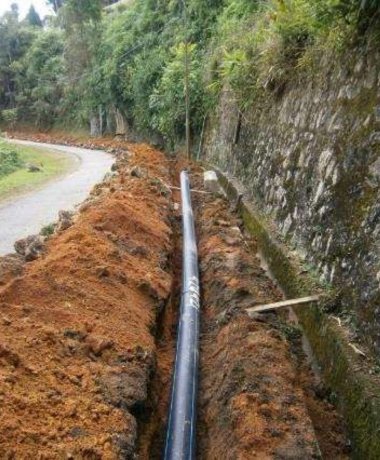
- Excavation and preparation of pipe trenches
- Installation and jointing of pipelines
- Alignment and level control
- Coordination with backfilling and reinstatement works
All works are executed according to approved drawings and site requirements.
Types of Pipes Installed
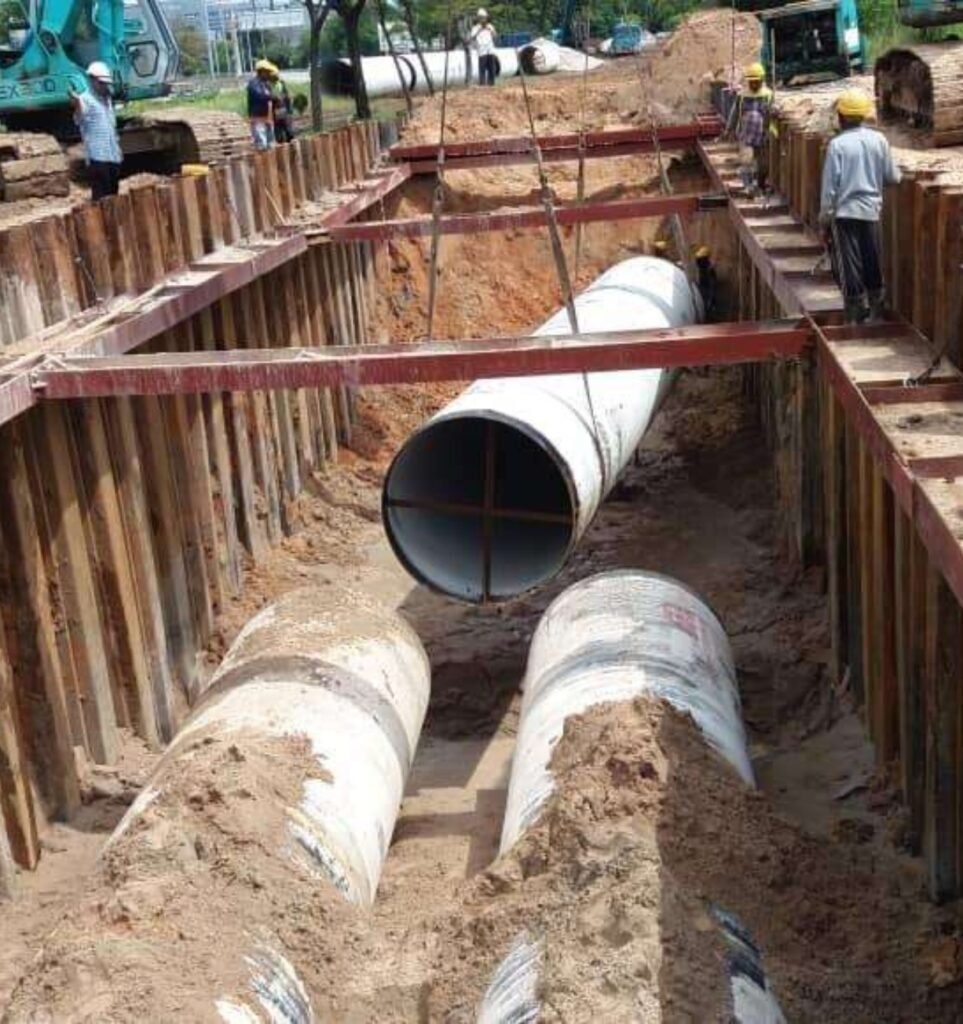
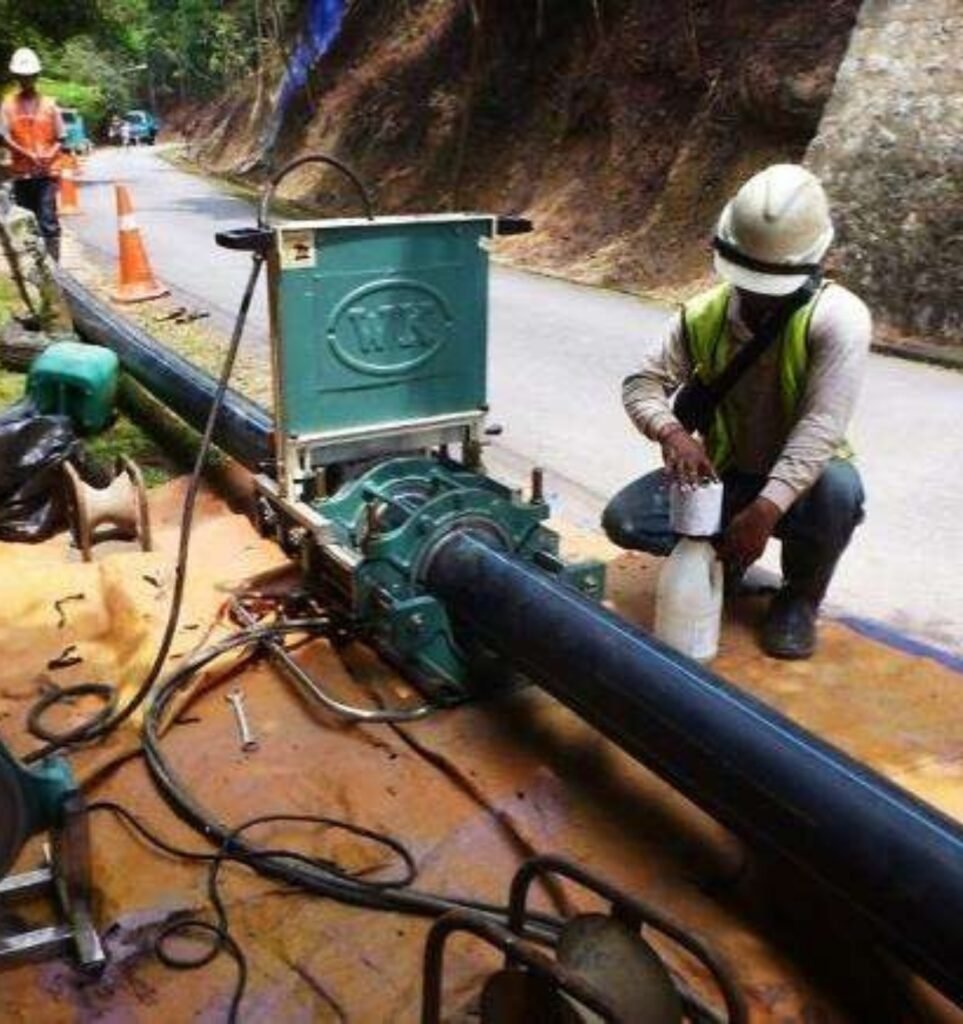
Sri Tanjong Bina has experience laying various types of pipelines, including:
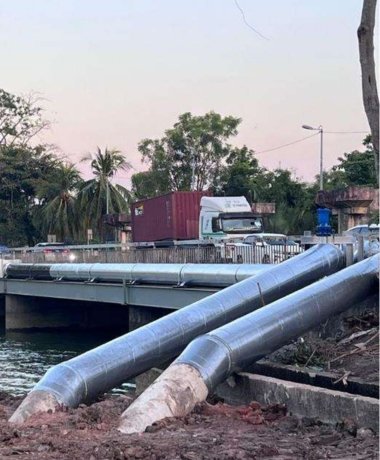
- Mild Steel (MS) Pipes
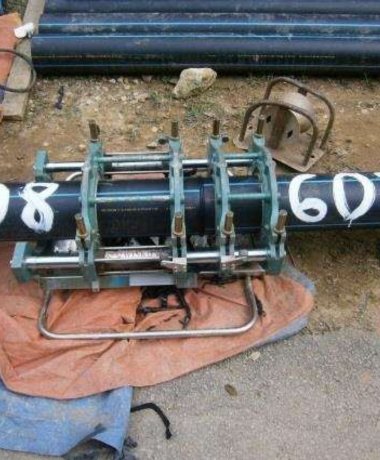
- High-Density Polyethylene (HDPE) Pipes
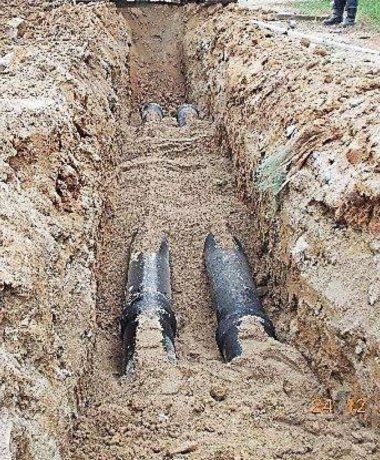
- Ductile Iron (DI) Pipes
- Other pipeline systems as required by project specifications
Pipe type selection and installation methods are carried out based on design requirements and site conditions.
Pipe Laying Methods
Pipe laying works are generally carried out using conventional open-cut methods, supported by sheet piling and bracing where required.
This method allows for:
- Accurate pipe positioning
- Proper jointing and inspection
- Controlled working conditions for deep installations
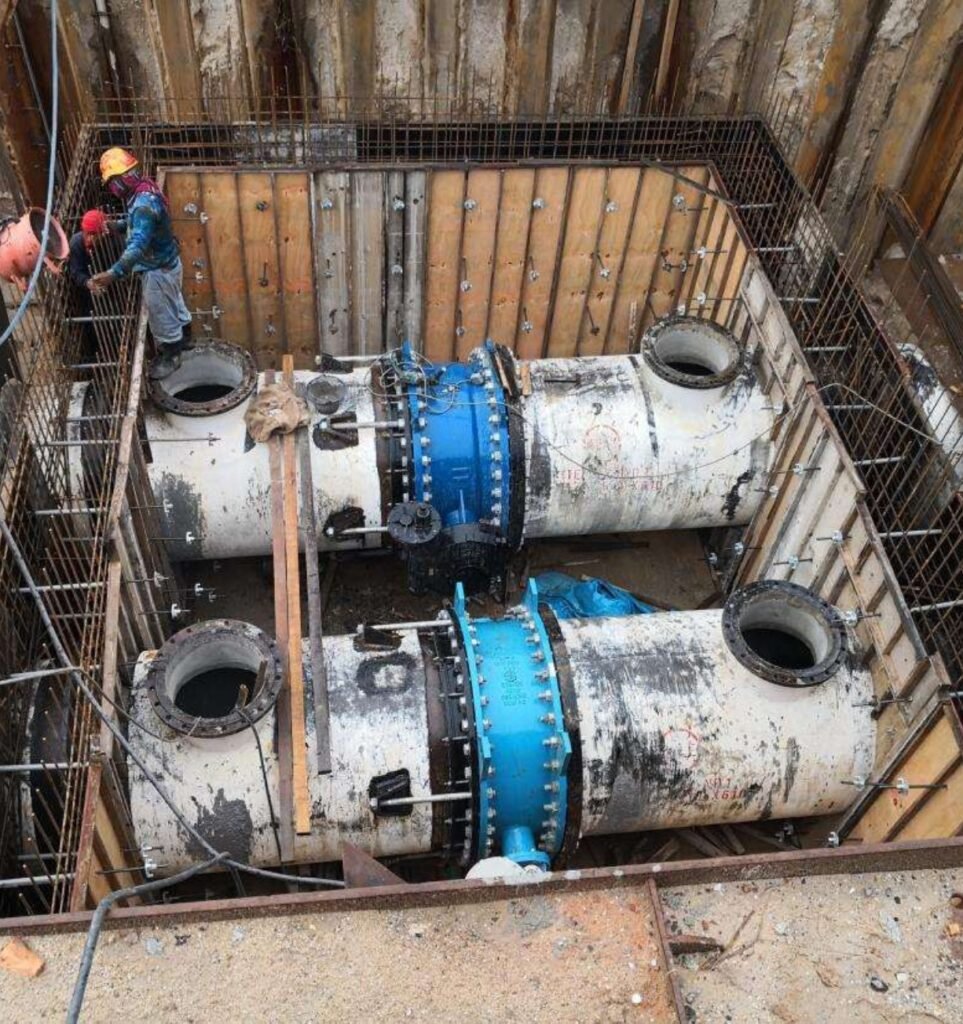
Pipe Jointing & Installation Works
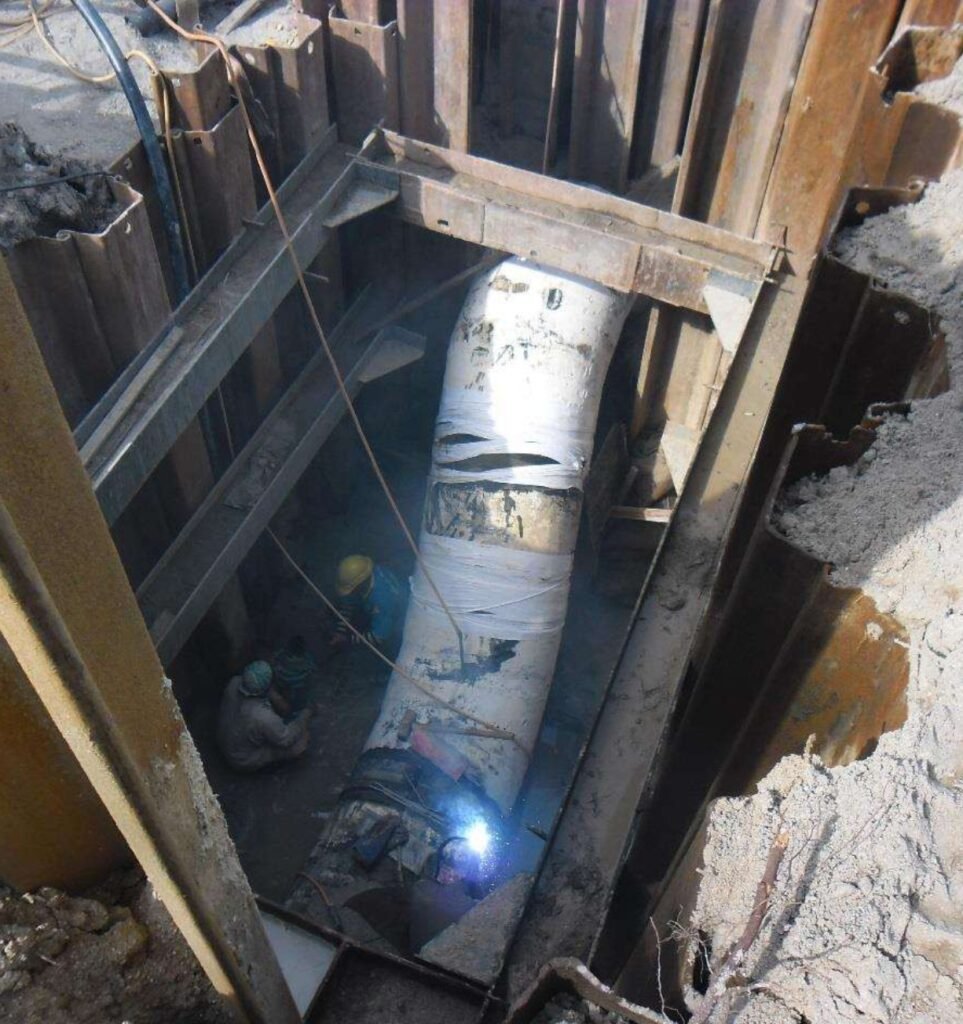
Pipe jointing works are performed in accordance with pipe material specifications and project requirements.
These works may include:
- Welding works for MS pipes
- Fusion jointing for HDPE pipes
- Mechanical jointing for DI pipes
Proper alignment and joint integrity are maintained throughout the installation process.
Special Applications & Site Conditions
Pipe laying works have been carried out under various site conditions, including:
- Deep excavations supported by sheet piles and bracing
- Confined working areas
- Road crossings and infrastructure corridors
- River crossing works (e.g. pipe installation across waterways)
Construction methods are selected to suit site constraints and project requirements.
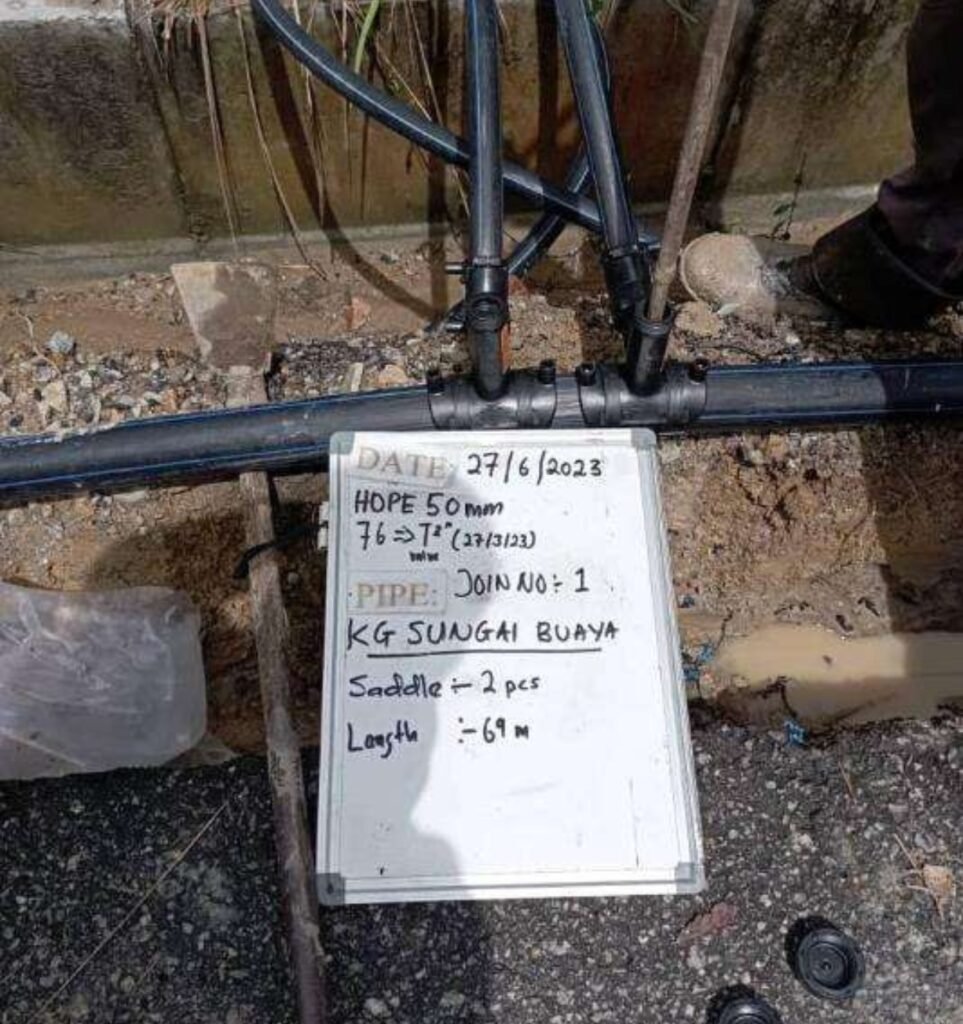
Methodology & Execution
The general execution sequence for pipe laying works that ensures systematic installation and quality control throughout the works
1. Initial Evaluation
Conduct a comprehensive review of construction drawings and assess existing site conditions to ensure technical feasibility.
2. Site Preparation
Perform necessary excavation works and prepare trenches according to the project’s specific profile and depth requirements.
3. Ground Support
Install sheet piling and bracing systems where necessary to maintain earth retention and ensure worker safety during installation.
4. Precision Positioning
Carefully place and align the pipes to meet the specified design gradients and coordinates.
5. Connection & Quality Check
Execute pipe jointing based on material specifications and conduct thorough inspections to verify joint integrity.
6. Completion & Restoration
Coordinate with subsequent backfilling and site reinstatement activities to restore the area to its original or required state.
Explore Our
Project References
Frequently Asked Questions
Sri Tanjong Bina installs MS pipes, HDPE pipes, DI pipes, and other pipeline systems as required by project specifications.
Pipe laying works are generally carried out using conventional open-cut methods, supported by excavation, sheet piling, and bracing where required.
Yes. Pipe laying works can be carried out in deep excavations with appropriate support systems such as sheet piling and bracing.
Pipe joints are carried out according to pipe material requirements, including welding, fusion jointing, or mechanical jointing methods.
Yes. Pipe laying works have been carried out across roads and rivers, with methods selected based on site conditions and project requirements.
Pipe alignment and level are controlled through proper setting out, supervision, and inspection during installation works.
Pipe alignment and level are controlled through proper setting out, supervision, and inspection during installation works.